Table of Contents
ToggleHome projects are known to create more waste than you expect—there is always something extra, which adds up to the pile of waste. Whether you are doing a kitchen remodel, a garage cleanout, or want to get rid of that yard waste, you don’t realize the moment when your simple plan turns into an enormous pile of debris that is taking up your space. That is when you need roll-off dumpster rental—not only is this convenient, but it is also the right move for keeping your project safe, organized, and timely in completion.
Homeowners across Orlando and Orange County, FL, with nearby areas like Apopka, Altamonte Springs, Clermont, DeLand, Longwood, Maitland, Ocoee, St. Cloud, Tavares, Windermere, Winter Garden, Winter Springs, Oviedo and Zellwood, trust Liberty Hauling Services when they need reliable rental services in Florida for their cleaning projects. No matter what kind of property cleaning you are into, the right dumpster can make the whole process simple and smooth.
Why Do Roll-Off Dumpsters Matter for Homeowners?
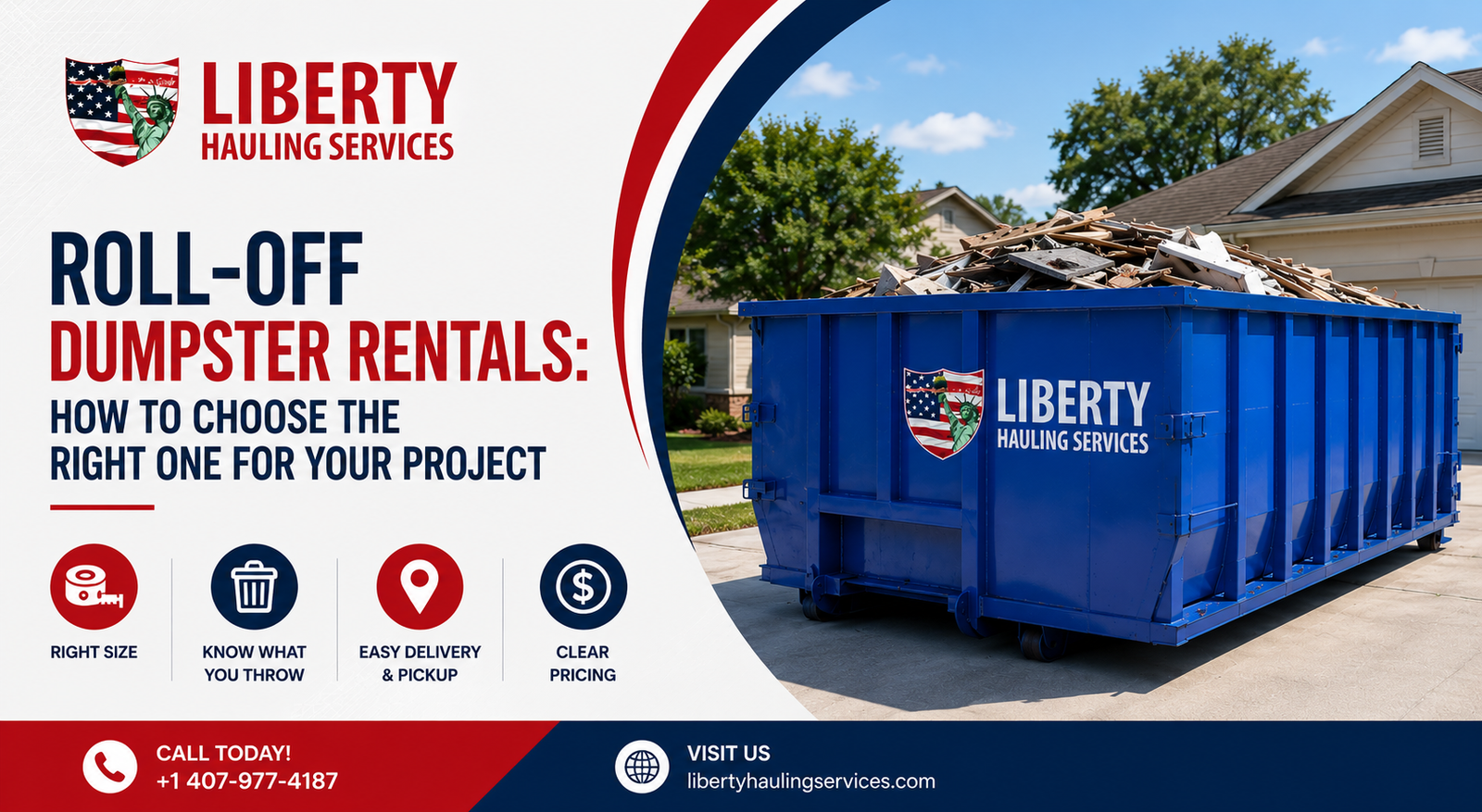
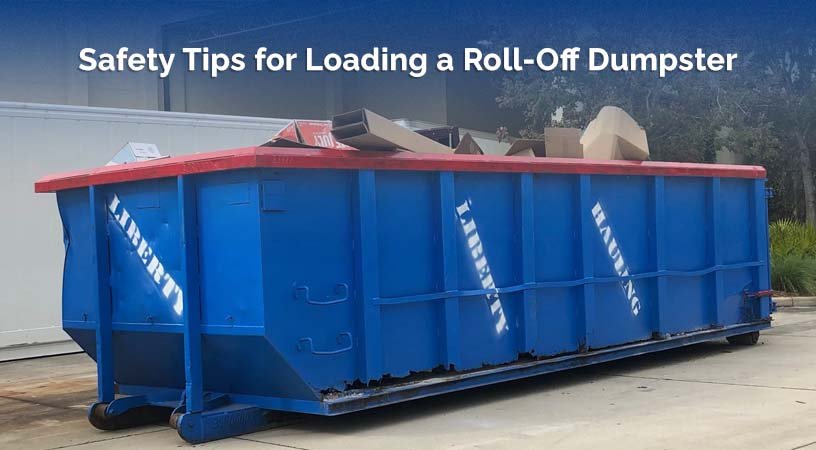
Roll-off dumpsters are essential for homeowners for a reason—they make the whole cleanup easier. Renovations, yard work, construction projects, or any major cleanout; when you have a dedicated container just for that, the whole mess is handled in one place. These containers are designed specifically for holding a large volume of debris and waste, so you can keep your property clean and organized while your project is still going on.
And the best part? These roll-off dumpsters do help in keeping the work on track. When you have a dumpster, you won’t have to make multiple trips and pause, but everything will go in just one centralized container on your property. Although you should know how to use it in the right way. Improper loading can lead to accidents, injuries, property damage, or additional fees.
Choosing the Right Dumpster Size for Your Project
Before booking any dumpster rental services in Florida, you need to know what dumpster size you’ll need for the project you are undertaking. Matching the availability of dumpster sizes and your needs is important—not just for clearing waste but for your wallet as well. At Liberty Hauling Services, we have three sizes of dumpsters for your waste.
10-yard dumpster
Size: The Smallest (12 ft long × 8 ft wide × 3.5 ft high)
Capacity: 1 to 2 tons (2,000 – 4,000 pounds)
Equal to: 3–4 pickup truck loads
Ideal for: small cleanouts, small renovations, light yard debris, garage or attic cleanouts.
Advantages: Easy to place and fit, great for daily use, and easy moving.
20-yard dumpster
Size: Medium (Approximately 22 ft Long × 8 ft Wide × 4 ft High)
Capacity: Up to 2–3 tons (4,000–6,000 lbs)
Equal to: 6–8 pickup truck loads
Ideal for: household decluttering, kitchen remodels, basement cleanouts, or medium roofing jobs
Advantage: Big enough for multiple jobs, compact to fit in work zones, can be used for more days.
30-yard dumpster
Size: Biggest (22 ft long × 8 ft wide × 6 ft high)
Capacity: 4,000 to 6,000 lbs (2–3 tons)
Equal to: About 9–12 pickup truck loads.
Ideal for: Big renovations, construction projects, demolitions, large-scale buildouts
Advantage: Huge space, bulky items removal, saves time and money.
In areas like Ocoee, Longwood, Maitland, and Winter Springs, homeowners do choose a bit bigger size always—you’ll always find more waste than imagined.
Weight Limits by Dumpster Size (What Homeowners Must Know)
Homeowners have been judging dumpster sizes with the wrong lens—they see if there is any space left, and they throw more. This is not how this works: roll-off dumpsters work on a ‘weight’ factor, and sometimes that causes problems in loading and clearing out.
Different materials do have different weights—clothes might take the same space as shingles, but their weights are just opposite.
Step-by-Step Guide to Loading a Dumpster Properly
When a dumpster is loaded in a safe and proper manner, it is safer, more efficient, and helps you in saving money as well as time. But how to do that? Like this:
Step 1: Load Heavy Items First
This is important—always place heavy materials at the bottom and before anything else. Things like furniture, construction debris, big branches, and appliances can be heavy and dangerous, so placing them at the bottom is a safe choice.
Step 2: Break down large items
Now comes the breaking down of big items like cabinets, furniture, boxes, wood pieces, and other items to reduce the volume.
Step 3: Add medium-weight debris
And then begin layering medium-sized materials like drywalls, flooring, and wood scraps to manage the space correctly.
Step 4: Fill empty spaces.
In the final act of cleaning out, you need to use smaller debris for filling gaps and using the space to its fullest.
Step 5: Finish with light materials
Things like cardboard and lightweight waste should be on the top of everything so it is safe as well as efficient. This method is especially useful for homeowners in Clermont, St. Cloud, and Tavares, where large yard and renovation projects often generate mixed debris.
What Happens If You Overload a Dumpster?
Nobody plans an overload, but it just happens. It all starts when you see a little bit of space left in the dumpster and want to add more waste. The problem with overloading is that it does not just affect the space of the dumpster but also impacts safety, cost, and pickup schedules. Here’s what could happen:
- Safety risks during pickup and transport: If there is loose or overflowing debris in the dumpster, it can fall on people or the floor when it is lifted. Debris is sharp and could harm anyone.
- Extra charges: Another thing that gets affected is the price of the dumpster. Overloading may add on some costs from disposal facilities or rental providers.
- Pickup delays: In worst cases, even your pickup can be delayed or cancelled as the dumpster is too heavy or dangerous to move.
- Required unloading: An overloaded dumpster can be a nuisance for rental providers, so they can even ask to remove the excess waste from the dumpster so it can be lifted.
Don’t want these situations to occur? No one does. To avoid all of it, the best thing is to play by the dumpster rules and stop when sufficient weight is filled. This one decision can solve a lot of problems and keep your project smooth, safe, and stress-free.
Dumpster Loading for Roofing Debris
Roofing projects need extra focus and attention, as shingles can be pretty heavy and dangerous if not handled well. The best practices at Liberty Hauling Services include:
- Equal distribution of shingles at the bottom of the dumpster.
- Avoid concentrated piles.
- Check the weight from time to time.
- Adjusting the waste with lighter debris.
Homeowners in areas like Apopka, Zellwood, and Longwood get the wrong weight assumption and often face early overage issues.
Prohibited Items You Should Never Dispose Of
Yes, even with roll-off dumpsters, there are some rules and regulations homeowners need to follow. For starters, there are some items and particles that are prohibited and create safety hazards, damage the environment, or even lead to extra charges. Some of them are listed below:
- Paints, stains, and solvents—Even if there is just a little in the can, leftover chemicals are powerful and can create toxic waste issues by leaking.
- Batteries (especially lithium-ion)—One of the dangerous things, as they can spark a fire in a dumpster after crushing under heavy debris.
- Tires – Tires are so solid that they don’t break that easily and need special recycling solutions.
- Propane tanks or gas cylinders—Extremely dangerous under pressure and heat.
- Oils, fuel, and flammable liquids— These do have the risk of fire and environmental contamination.
- Chemicals and pesticides – Harmful to soil, water, and sanitation systems.
- Medical or biohazard waste – Needs regulated disposal, never general waste systems.
While you might consider these as just some rules, these are parameters that try to look after the safety of yours, your family’s, the service workers’, and the environment’s.
A Cleaner Project Starts with a Smarter Way to Dispose
Whenever a home project starts, you assume a smooth flow of process and great cleanup, but somehow, there is always a little more waste than you imagined. That is where roll-off dumpsters show their magic and help in getting your clean and effective home again.
Dumpster rental services in Florida from experts like Liberty Hauling Services are the support system after every renovation or modification. With the availability of different sizes of dumpsters, we offer you help so that you can focus on your project’s progress. If you are in the middle of any project or planning to start one, you need dumpster rentals. Call Liberty Hauling Services, and let’s get you your back-staging hero.
FAQs
Q: How heavy is too heavy for a dumpster?
A: For every dumpster size, there is a decided weight limit. As soon as you hit that limit, you need to stop, or it will be extremely heavy and can result in extra charges or pickup refusal.
Q: Can I fill a dumpster above the rim?
A: Of course not! All the materials should be at the level of or below the top edge for safe transportation.
Q: What if I need more space?
A: If all your waste is not adjusted in one dumpster, you can always request another one or schedule a swap-out service.
Q: What happens if I overload a dumpster?
A: That can turn into some real issues, like extra fees or delays, or require you to remove excess material.
Q: Can roofing debris go in a dumpster?
A: Sure, but as they are heavy in nature, they should be handled carefully to avoid exceeding weight limits.
Liberty Hauling Services Also Serve These Locations:
Apopka, FL | Altamonte Springs FL | Clermont FL| DeLand, FL | Eustis FL | Longwood FL | Maitland FL| Ocoee FL | St Cloud FL | Tavares, FL | Windermere FL | Winter Garden | Winter Springs FL | Zellwood FL | Orlando FL | Orange County | Oviedo, FL