Table of Contents
ToggleOrdering a dumpster feels simple until you start wondering whether that old paint can, the busted water heater, or a pile of roofing shingles is actually allowed inside. Getting this wrong can mean a refused pickup, an unexpected fee, or worse, a real safety issue at the landfill. Here’s a clear breakdown of what you can and can’t toss into a dumpster rental in Central Florida.
Why This Actually Matters
Dumpster rules aren’t arbitrary. Landfills and disposal facilities have strict regulations around hazardous materials, and a hauler that ignores them risks fines, environmental damage, and real safety hazards for their crew. That’s why every dumpster rental company, including Liberty Hauling Services, keeps a defined list of what’s accepted and what isn’t, and why calling ahead when you’re unsure is always the better move than guessing.
Knowing the rules upfront also saves you money. Loading prohibited items into your dumpster can mean the whole load gets rejected at the landfill, or you get hit with unexpected disposal fees once the hauler discovers what’s inside. A few minutes checking the list before you start tossing things in avoids all of that.
What You Can Put in a Dumpster
Most non-hazardous household and construction debris is fair game. Here’s what typically goes in without any issue:
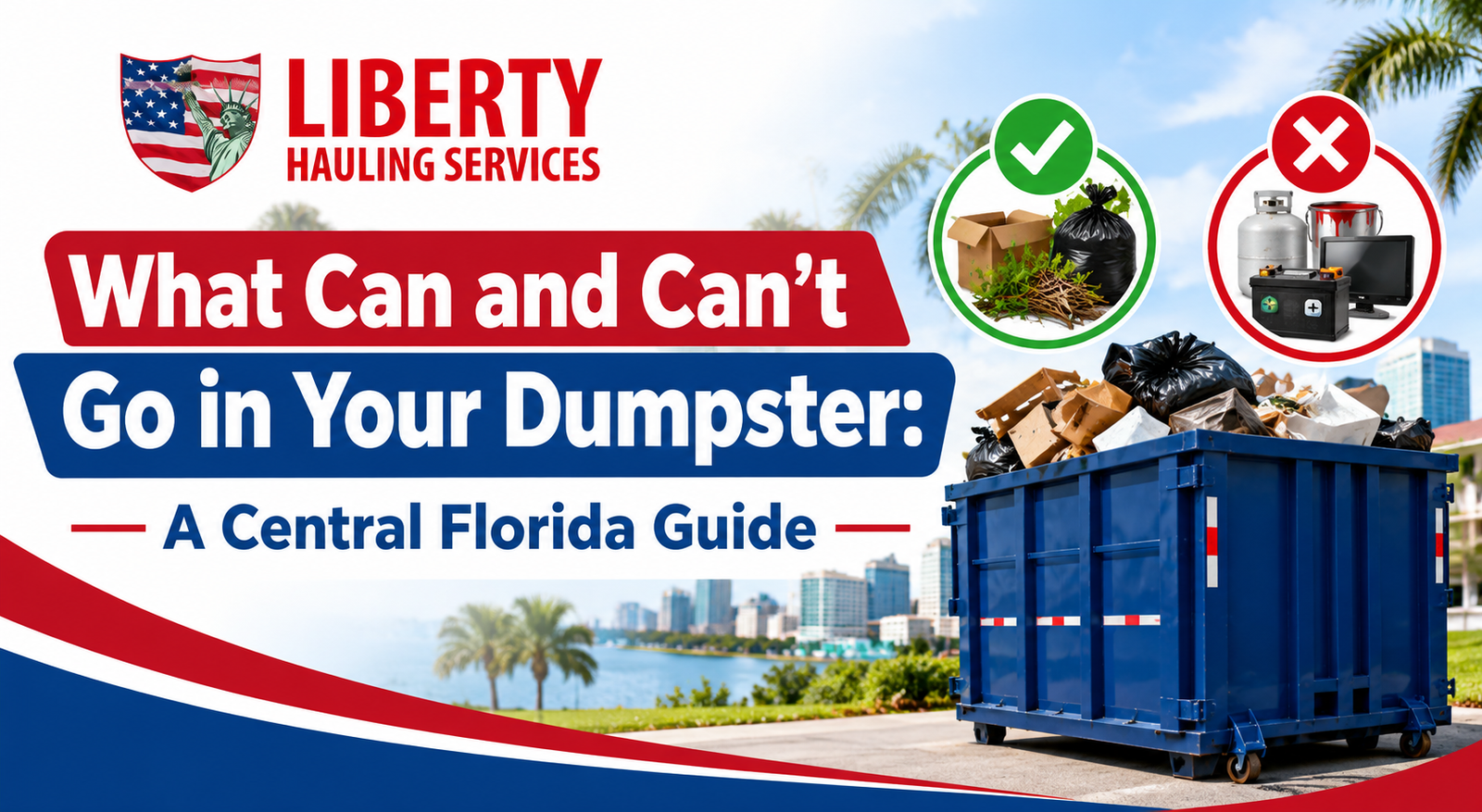
- General Household Items: Old furniture, clothes, toys, kitchenware, carpets, and clutter cleared out of garages, attics, or basements.
- Home Renovation and Remodeling Waste: Drywall, tiles, flooring, cabinets, countertops, fixtures, insulation, lumber, and other debris from remodeling projects.
- Yard Waste: Branches, leaves, grass clippings, soil, tree stumps, and other organic material from landscaping or yard cleanup.
- Appliances and Electronics: Non-refrigerant appliances like washers, dryers, microwaves, and small electronics. It’s worth confirming large appliance eligibility before disposal, since some larger units need special handling.
- Construction and Roofing Debris: Shingles, nails, bricks, concrete, and wood from smaller home construction or roofing projects.
That covers the bulk of what most residential and commercial cleanup projects generate, whether it’s a garage cleanout, a kitchen remodel, or post-storm yard debris.
What Can’t Go in a Dumpster
Hazardous and regulated materials are off-limits across the board. These items require special handling and can’t go in with your regular debris:
- Paints, oils, and automotive fluids
- Hazardous chemicals or medical waste
- Tires, batteries, and fuel tanks
- Refrigerators containing Freon
- Aerosol cans
- Asbestos and other regulated waste
- TV sets containing mercury
If you’re not sure whether something falls into this category, the best move is to call before you load it in. A quick phone call avoids the risk of a refused pickup, a surprise fee, or having debris turned away at the landfill entirely.
Why Hazardous Materials Need Separate Handling
Items like paint, chemicals, batteries, and Freon-containing appliances aren’t banned from dumpsters just to be difficult. These materials can contaminate soil and groundwater, pose fire risks, or release harmful substances if they’re crushed or compacted along with regular debris. Disposal facilities are set up to handle hazardous waste through separate, regulated channels, which is exactly why it has to be kept out of a standard roll-off container.
If you’ve got a mix of regular debris and hazardous items, don’t assume you have to figure out hazardous disposal on your own. Liberty Hauling Services can point you toward the right next step if you’re unsure how to handle something that doesn’t belong in the dumpster.
How to Avoid Surprises When Loading Your Dumpster
A few habits make the whole process smoother:
- Sort as you go: Keep hazardous items separate from the start rather than sorting through a full dumpster later.
- Ask before you assume: If an item feels like a gray area, like a large appliance or a partially full paint can, a quick call clears it up fast.
- Don’t overload past the fill line: Debris piled above the rim isn’t just against the rules, it can also be unsafe during transport.
- Watch the weight, not just the volume: Heavy materials like concrete or dirt can hit weight limits well before the container looks full.
These small habits go a long way toward avoiding overage charges or a rejected pickup once your project wraps up.
Different Projects, Same Basic Rules
Whether you’re cleaning out a house, managing a construction site, or handling storm damage cleanup, the accepted and prohibited items list stays largely the same. Construction and demolition debris, yard waste, and household junk are all fine across residential and commercial rentals alike. Hazardous materials, batteries, tires, and regulated waste stay off-limits no matter what type of project you’re working on.
That consistency makes it easier to plan; whether you’re a homeowner clearing out a garage or a contractor managing a larger renovation, the same core guidelines apply.
Sizing Your Dumpster Around What You’re Disposing Of
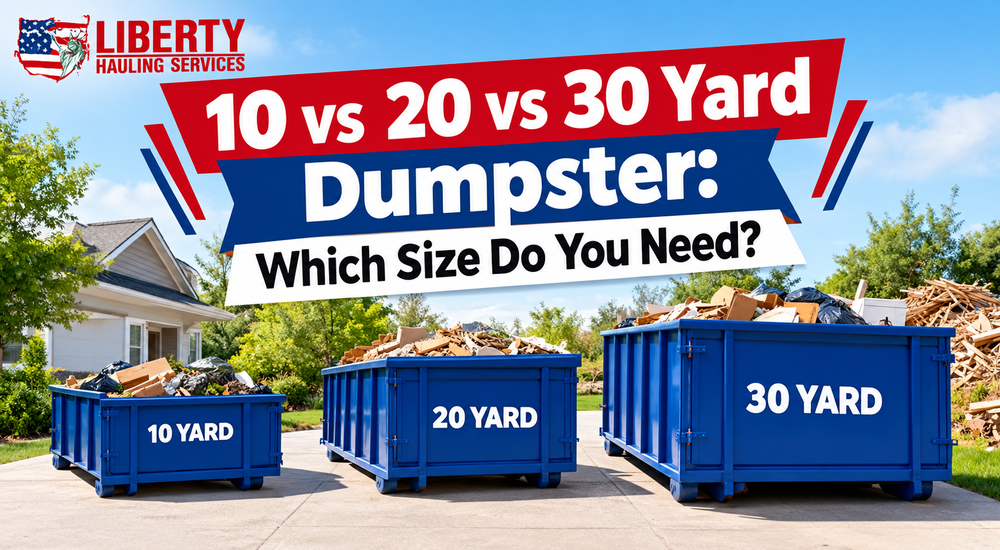
What you’re allowed to throw away is one part of the equation, but how much space it takes up matters just as much. Liberty Hauling Services offers 10, 20, and 30-yard containers, and the right size really depends on the type of project. A garage cleanout with mostly household items and boxes might only need a 10-yard container, while a full renovation generating drywall, flooring, and cabinetry debris often calls for something closer to a 20 or 30-yard dumpster. Picking a size based on your actual project, rather than guessing, helps avoid both an overage charge and the hassle of needing a second container mid-project.
Have Questions About a Specific Item?
Not every situation fits neatly into a list. If you’ve got something you’re unsure about, whether it’s a large appliance, a partially used container of something, or debris from an unusual project, it’s always worth reaching out before you load it in. Liberty Hauling Services has been handling dumpster rentals across Central Florida for more than 35 years, and their team can help you figure out what’s allowed before it becomes a problem at pickup.
Getting your dumpster rental right the first time means no surprise fees, no rejected pickups, and no last-minute scrambling to figure out where a prohibited item actually needs to go. Check out the full dumpster rental FAQ for more details on rental terms, or reach out directly with any questions about your specific project. Get a free quote