Table of Contents
ToggleWhen a storm rolls through Central Florida, the cleanup afterward can feel just as overwhelming as the storm itself. Downed branches, damaged fencing, soaked drywall, ruined furniture – it piles up fast, and a lot of homeowners aren’t sure where to even start. Here’s what you need to know about handling storm debris the right way and how a dumpster rental can take some of the weight off.
Why Storm Debris Needs a Real Plan
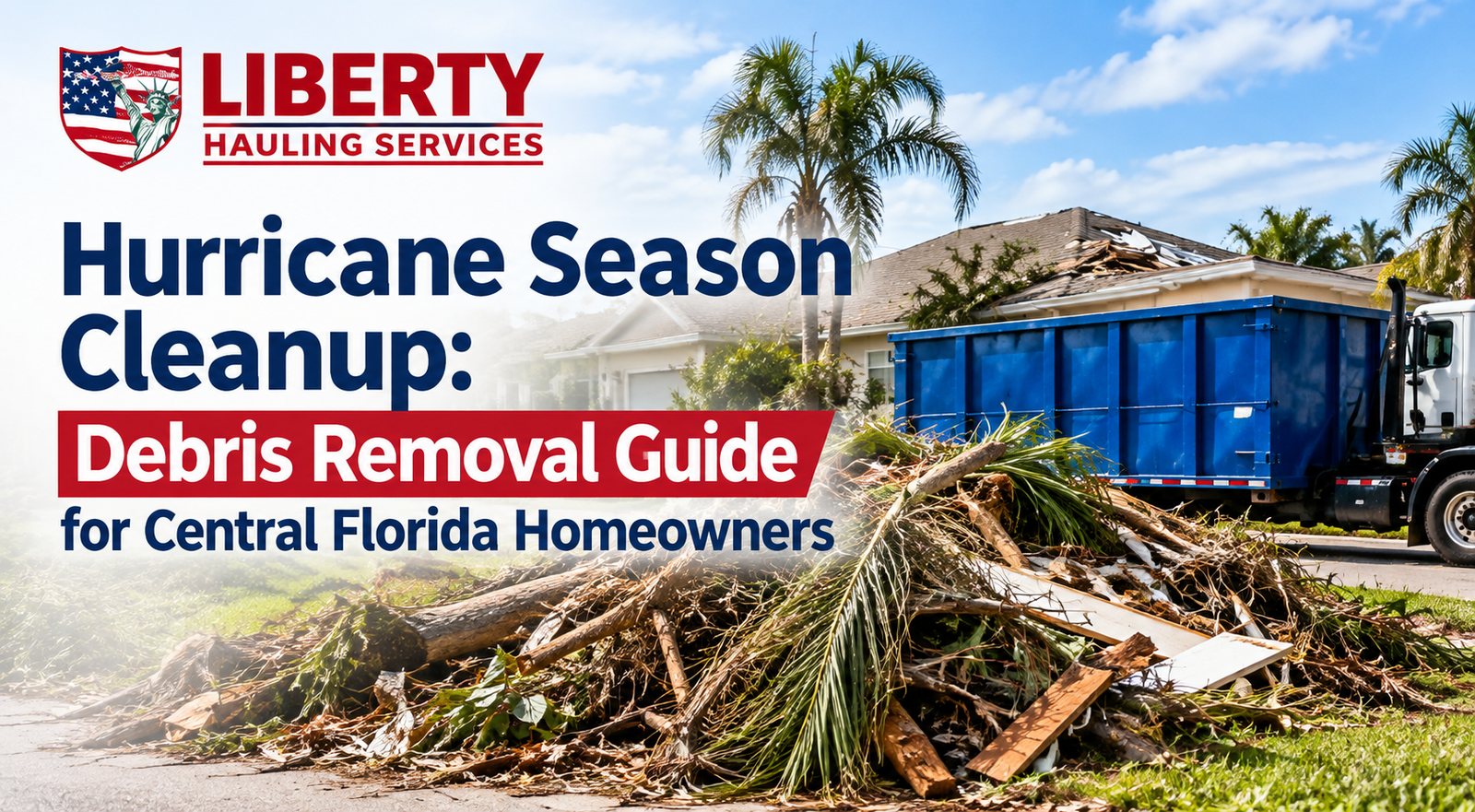
Hurricane damage isn’t a few extra trash bags. Downed tree limbs, water-damaged belongings, debris from roof or fence repairs – a single storm can produce more waste than most home projects ever would. Try handling that with regular trash pickup or a handful of dump runs, and you’re looking at weeks of debris sitting in your yard. That’s more than just an eyesore, too.
Storm cleanup also doesn’t happen on your schedule. You’re not planning this out weeks ahead like a kitchen remodel – you’re dealing with it the moment the storm passes, usually while juggling insurance calls and repair estimates at the same time. Having somewhere for the debris to go, without adding more decisions to your plate, helps more than people expect.
What Actually Counts as Storm Debris
Liberty Hauling Services takes storm, fire, and flood-damaged debris as part of their regular dumpster rentals, which covers most of what a hurricane leaves behind:
- Yard debris: downed branches, uprooted shrubs, storm-damaged trees
- Household junk and furniture: anything water-damaged or wrecked by wind
- Home renovation waste: drywall, flooring, insulation, lumber from storm repairs
- Roofing and construction debris: shingles, nails, and other materials from roof repair work
- General demolition waste: for bigger structural damage cleanup
Hazardous stuff – paints, oils, chemicals, batteries, and Freon-containing appliances – is off-limits, the same as any dumpster rental. If you’re not sure whether something counts, just call first. Getting that wrong can mean the landfill turns you away or hits you with a surprise fee.
Picking the Right Size for Storm Cleanup
Storm debris adds up faster than people expect, so getting the size right the first time saves you a second rental later:
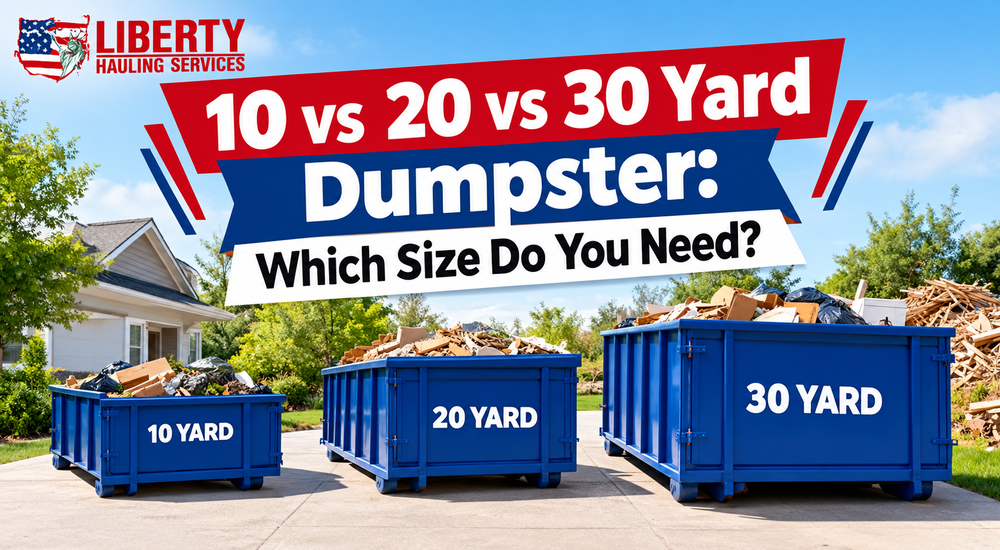
- 10-yard dumpster (10 ft. L x 8 ft. W x 4 ft. H): good for smaller yard cleanup, downed branches, minor debris
- 20-yard dumpster (20 ft. L x 8 ft. W x 5 ft. H): fits medium storm damage, yard debris, and some interior repairs
- 30-yard dumpster (20 ft. L x 8 ft. W x 7 ft. H): for major storm damage, bigger renovations, or heavy structural debris
Not sure which one fits? Liberty Hauling’s team can walk you through it over the phone once they know what kind of debris you’re dealing with. If you’re stuck between two sizes, go bigger – running out of room mid-cleanup and having to book a second container is more of a hassle than most people plan for.
Why Speed Matters After a Storm
Debris sitting around your property after a hurricane isn’t just ugly to look at – standing water, damaged wood, and downed branches can turn into safety and pest problems the longer they sit there. That’s why fast turnaround matters this time of year. Liberty Hauling Services offers same-day drop-off if you call before 10am, with no delivery or pickup fees and no fuel surcharges tacked on – which counts for a lot when storm expenses are already stacking up.
Waiting also means competing with the rest of your neighborhood for delivery slots, since everyone’s cleaning up around the same time after a storm. Booking early, rather than after the rush starts, usually makes the whole thing go smoother.
A Local Company That’s Seen This Before
Liberty Hauling Services has been family-owned and operated in Central Florida for more than 35 years, covering Orange, Seminole, and Osceola Counties – Orlando, Apopka, Oviedo, Winter Park, and everywhere in between. That kind of long-term local presence means storm season isn’t new territory for them.
They’re also licensed and insured and used to working directly with insurance companies – which can matter a lot if your cleanup is tied to a claim. A hauler who already knows how that process works usually means fewer delays while you’re trying to get things back to normal.
How the Rental Process Works
Setting up a dumpster for storm cleanup follows the same process as any residential rental:
- Request a quote: call or fill out the online form with your project details
- Pick your dumpster size: Liberty’s team helps based on the scope of damage
- Schedule delivery: same-day drop-off available if you call before 10am
- Fill it up: load debris as you clear the property
- Request pickup: once you’re done, they haul it away and handle disposal
No hidden fees anywhere in that – no delivery charge, no fuel surcharge, just one flat rate. That kind of clarity matters even more during storm season, when unexpected costs are already coming from every direction.
Get Ahead of the Cleanup
You don’t have to let storm debris pile up in your yard for weeks. Liberty Hauling Services has been doing this in Central Florida for over three decades, with same-day delivery and no hidden fees, so getting your property back to normal doesn’t have to drag out. Whether it’s a few downed branches or debris from a full storm repair, having the right-sized dumpster on-site from the start keeps things moving instead of stalling.
Check sizing and options on the residential dumpster rentals page, or just call to get one scheduled.